


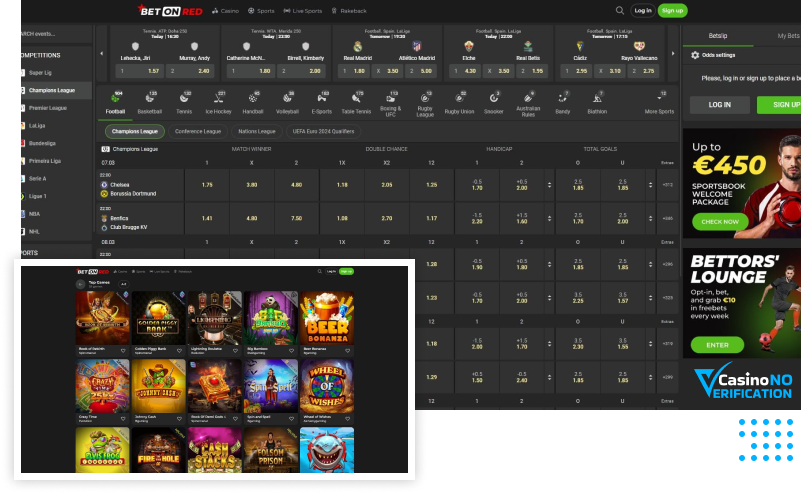
A casino licence is more than a document. It’s a binding promise to run a financially sound, player-safe, and transparent operation. BetOnRed Casino, for example, demonstrates how a reliable licensing framework affects every corner of the business — payment processing, affiliate marketing, and more. Strong licensing requirements draw a clear line between platforms that take compliance diligently and those that treat it as a box to tick. That line shows up in seven key areas.
4. Privacy Safeguards and Data Governance Framework
Information security has moved from a secondary concern to a fundamental licensing requirement. Casinos gather ID documents, payment info, device fingerprints, and behavioural data. Rigorous regulators insist on data minimisation, purpose limitation, and clear retention schedules. Players need to know what’s collected and why. Consent has to be clear and kept separate from marketing opt-ins. This aligns with global standards like the GDPR, but it also manifests in regulator-specific data rules.
Personal data has to be guarded by both technical and organisational measures. Encryption in transit and at rest, access controls, and audit logs are the minimum. The casino must make sure that any third-party processors — payment providers, affiliate platforms — meet the same bar. A data breach response plan isn’t discretionary. If player information gets compromised, the operator has to tell the regulator and affected users within a defined window. Great licensing converts privacy screw-ups into a direct threat to the licence.
Data subject rights often get neglected in flimsy licensing setups. Demanding requirements give users the right to access, correct, delete, and port their personal data. Operators have to respond within set deadlines and can’t charge unreasonable fees. Pulling marketing consent has to be quick and painless. These aren’t optional extras; they’re binding licence conditions. Regulators can dig into privacy complaints and penalise operators with penalties for systemic failures.
Cross-border data transfer rules carry significant weight for a platform that’s accessible worldwide. Strong licences require legal mechanisms for shipping data abroad — standard contractual clauses or adequacy decisions. The operator has to delineate data flows and document exactly which countries hold player information. If a processor moves to a new location, the licence conditions trigger a reassessment. That prevents data from sliding into jurisdictions with weaker protections without the player realising or the regulator signing off.
1. Legal Precision and Oversight
A robust licence is built on a firm legal foundation. Authoritative regulators define exactly what licence categories are offered, how to apply, and what enforcement tools they possess. Operators are required to state exactly which gambling activities they’re permitted to run, which territories they cover, and which technical standards are relevant. Any vagueness about the licence’s scope leaves players and partners at risk. The best jurisdictions also require that the operator has a physical or operational presence so the authority can maintain a close eye on day-to-day activities.
Good licensing regimes see beyond the company name and scrutinize the people behind it. Applicants provide ID, criminal background checks, proof of where the money came from, and detailed ownership charts. Anyone with a significant beneficial stake gets vetted. That stops hidden interests from controlling the operation. Regulators can reject a licence if key people are missing the right skills or character. In flimsier systems, these checks barely exist, and licences are granted with little to no scrutiny.
What distinguishes a real licence from a worthless certificate is enforcement power. Strong regulators can suspend a licence, levy fines, demand fixes, and pull the plug fast. They show up for on-site inspections and request live operational data. The threat has to be real. BetOnRed Casino understands that a respected licence comes with ongoing duties, not just a one-time approval. A licence that nobody polices offers zero protection to players.
Players from around the world often come across licences from different countries. A solid licensing requirement spells out clear rules for operating across borders — which markets are off-limits, what local ad restrictions are in place. The operator is required to prove it can block banned territories and check where players really are. This kind of jurisdictional discipline stops operators from shopping for the weakest regulator. Selecting a tough framework signals the market that the casino respects legal boundaries, not that it’s hunting for loopholes.
Two. System Reliability and System Specifications

Licensing goes beyond a mere legal formality. It relies strongly on technical systems that need to achieve measurable benchmarks. A credible regulator mandates independent certification of random number generators, game RTP settings, and the platform’s architecture. Testing labs like eCOGRA, GLI, or iTech Labs validate that games run fairly and that the returns they report match the maths. Without that technical audit, players cannot be sure that the outcomes aren’t rigged.
Information security is part of the package too. Operators must have intrusion detection, encryption for player data, and secure payment gateways. The platform must be designed to block unauthorised access to player accounts, transaction logs, and bonus rules. Regulators may require penetration testing and a deadline for fixing any holes. These technical standards are not permanent — operators must maintain systems current as threats change. That safeguards player money and the casino’s own integrity.
Anti-money laundering controls sit at the heart of operational requirements. Licensed casinos have to verify a player’s identity before processing a withdrawal, watch for odd betting patterns, and submit suspicious transaction reports. They are required to keep records for a set period and train staff to spot red flags. Strong licences require a written AML programme, a designated compliance officer, and regular internal risk assessments. Weak licences could note AML duties but never ask for proof that anything actually works.
Dispute resolution is another technical must. Good licensing regimes make operators keep game logs, bet histories, and all communication records. When a player disputes a result or a payout, the operator must provide a clear audit trail. Some regulators even supply mediation or arbitration. This compels casinos to keep accurate records and settle complaints with evidence, not just a manager’s whim.
Seven. Auditing, Reporting, and Continuous Supervision
A strong licence isn’t a one-time stamp. It depends on continuous oversight and external audits. Regulators demand annual financial audits, technical audits, AML audits, and responsible gambling assessments. The auditors have to be approved by the authority and submit findings directly to the regulator, not only to the operator. That outside check guarantees policies actually are implemented. Without third-party review, in-house promises can drift far from what is truly happening.
Operators are required to file routine compliance reports that cover player complaints, game performance, financial liquidity, security incidents, and marketing activities. The regulator may cross-check those reports with unexpected data requests or undercover visits. Top-tier licensing regimes use risk-based supervision, focusing more on operators with elevated complaint rates or unusual financial patterns. That sort of flexible oversight detects problems a static licence wouldn’t ever spot.
Reporting of suspicious transactions has to be instant and fully recorded. Licensed casinos maintain a confidential route for identifying potential money laundering, fraud, or terrorist financing. Those reports are secret and can’t be shown to the player. Strong regulators demand operators to file even when transactions are under standard thresholds but still look off. That feeds into wider financial crime prevention. A great licence views reporting as an continuous obligation, not a yearly document.
Enforcement escalation is built into the compliance framework. Regulators deliver improvement notices, demand remediation plans, apply financial penalties, and revoke licences when serious failures happen. The public record of enforcement actions provides players and affiliates a window into how an operator operates. BetOnRed Casino shows how a brand can use these expectations to create trust — every licence condition acts as a promise to customers and business partners.
The end result is a platform where licensing requirements aren’t tucked in fine print — they are the operating standards everyone can view. Players receive fair games, transparent withdrawals, and responsible gambling tools that function effectively. Affiliates operate under clear rules. Regulators can deliver real consequences. A casino that chooses this path over a bare-minimum licence minimizes its long-term legal, financial, and reputational risk. Great licensing becomes a competitive edge.
6. Affiliate Scheme Management and Advert Rules
Affiliate marketing is an extension of the casino’s license. Strong licensing requirements make the licensee accountable for affiliate claims, the audience they reach, and how they design campaigns. Affiliates cannot assure certain victories, hide important conditions, or suggest gambling is a way out of money trouble. Operators need formal agreements that oblige partners to adhere to ad regulations. Without that contractual backbone, unscrupulous partners can give players false information and cause the operator problems.
Solid affiliate programmes necessitate identity checks and ongoing oversight. The licensee has to be fully aware who’s pushing its brand and where those ads appear. Affiliates need to be screened for past dodgy behaviour or links to forbidden content. The operator has to watch ad placements, bonus claims, and review sites. If an partner breaks the advertising rules, the operator has to cut ties and, when needed, inform the authority. The list below captures what a controlled compliance framework looks like.
- Formal contracts that define advertising and data protection rules.
- A ban on targeting minors, self-excluded players, and restricted territories.
- A obligation to declare the commercial relationship in reviews and promos.
- Prior approval of bonus terms and landing page claims.
- Routine checks on traffic sources and marketing networks.
- Disciplinary steps for non-compliant affiliates, including commission clawbacks.
Affiliate data sharing has to comply with privacy laws too. Operators can only transmit the personal data that’s strictly needed for tracking and commission maths. That data can’t be commercialized or used for unrelated marketing. Affiliate platforms have to provide accurate reports without disclosing player identities. Strong licences audit these data flows because affiliate setups can easily sidestep internal data governance. A secure affiliate programme shouldn’t undercut the casino’s wider data protection duties.
Commission structures need to be unambiguous. Affiliates should know exactly how revenue share, CPA, or hybrid deals are calculated. Terms have to be specific about chargebacks, bonuses, and player value adjustments. Operators can’t mask behind vague wording to withhold commissions. Licensing conditions often require fair commercial practices, and regulators may look into affiliate payment disputes. Transparent terms minimize conflict and protect the brand’s reputation.
5th Safe Gambling as a Licensing Standard
Responsible gambling has moved past superficial talk — it’s now a tangible licensing requirement. Rigorous regulators demand that operators offer deposit limits, loss limits, wager limits, and session time caps. Players need to be able to set these restrictions before they start betting and adjust them only after a cooling-off period. The casino must not build systems that dodge those limits. Compliance is assessed through product testing and reviews of player transactions.
Self-exclusion is a must. A licensed casino has to provide a straightforward way to self-exclude that instantly cuts off gambling, marketing, and bonus offers. The block has to cover all linked accounts and stay in place for the chosen duration. The strictest regimes tie self-exclusion into wider networks when they can, so a player can’t just hop to a sister site. And the operator must not going chasing after excluded players.
Early risk detection is what separates operators that care from those that just react. Top-tier licensing frameworks demand systems that flag changes in behavior — a sudden jump in deposit frequency, chasing losses, late-night gambling binges. Staff need training to spot trouble and step in the right way. Those interactions need to be written down and reviewed. A licence that only asks for a responsible gambling page is a joke. Strong regulators expect active monitoring and genuine intervention.
Marketing to vulnerable groups is also restricted. Operators are not allowed to target self-excluded players, people showing signs of harm, or anyone underage. Affiliate networks must be watched to make sure they aren’t pushing gambling to minors or using unethical ‘recovery’ promises. Strong regulators make the casino accountable for what its partners do. That turns responsible gambling into a chain of accountability that runs through every ad and promotion.
3. Separation of Player Funds and Financial Assurances
A clear indicator of a solid license is mandatory segregation of player funds. Operators are required to hold customer balances in dedicated bank accounts that are not used for rent or payroll. That protects player money if the casino encounters problems. External auditors check that the account structure is real. Premium licensing standards detail exactly what must be covered — deposits, pending withdrawals, even progressive jackpot flashscore.com pools.
Financial guarantees go further than just splitting accounts. Some jurisdictions mandate a bond, an insurance policy, or a reserve fund to cover what’s owed to players if the company fails. That matters most for new operators or ones without a proven history. Regulators may also establish a minimum capital floor. The operator must demonstrate it has enough liquid assets to meet its expected payouts. These rules reduce the risk of players turning into unsecured creditors in a bankruptcy.
Payment processing standards are embedded in financial licensing. Strong regulators insist on tight controls over deposits, withdrawals, and chargebacks. Operators are required to use licensed payment providers, monitor transaction limits, and prevent unapproved payment methods. Withdrawal requests need to be processed within set timeframes, unless extra verification is triggered. That provides players a legal path when money becomes blocked. A casino that follows tough financial rules treats payouts as a binding commitment, not a favour they can delay at will.
Reporting duties enhance financial accountability. Licensed operators send regular financial statements to the regulator, usually certified by a qualified auditor. Those statements outline revenue, player liabilities, cash on hand, and any unusual discrepancies. The regulator can demand an immediate heads-up if liquidity declines below a certain level. You will not find that in weak regimes, where a financial collapse might go unnoticed until players start screaming about missing withdrawals. Great licensing makes financial health a compliance metric, not an afterthought.